






„If you don’t really know your IT infrastructure, you’ll never know what’s going on when there’s a real problem.”
It’s true that the system administrator is always there when things go wrong. But what if the focus were not just on fixing faults, but also on anticipating what might go wrong and how we can prepare for it?
The Art of Prevention
IT professionals They work incredibly hard to ensure that any conceivable common problem or fault does not arise, or, if it does, to rectify it quickly. But what if something more serious is brewing in the background, which it could be avoided right now?
Proactivity is one of the most important tools for a well-functioning IT team. But to achieve this, it is essential that we always stay one step ahead of potential problems. And that requires a bit of a superhero mindset to spot in good time what’s going on in the system.
Proactive IT: The secret weapon
Proactive IT is not just a buzzword.
This is the work that goes on in the background, whilst users aren’t even aware that someone is currently 🛡️ is building a defence around their computers, or optimise their servers so that the databases always run smoothly.
That’s why you shouldn’t wait until something breaks down. It’s much wiser to carry out regular maintenance, the monitoring and the updates They ensure that errors never take us by surprise. Or at least much less often.
And if all else fails, at least we’ve got a backup. Right?! 💾👀
Updates: these are not the sort of thing you can put off until later
You often hear people say, „I’ll update it later” – but the postponing updates It can cause more damage than anything else.
Updates not only patch security vulnerabilities, but in most cases also improve performance and stabilise systems.
If we don’t keep them up to date, it’s like leaving a door in our house unlocked – anyone can walk in. The worst thing that could happen is that we wouldn’t even realise it.
Of course, it is not wise to update everything without careful consideration, as these updates may contain errors, or certain components of our system may not yet be ready for the next update, which could lead to a catastrophic failure. A good IT team has the tools to test these updates before rolling them out to the live environment. If all goes well, you won’t even notice that your computer, network and server have been running the latest version for a week.
The magic of monitoring
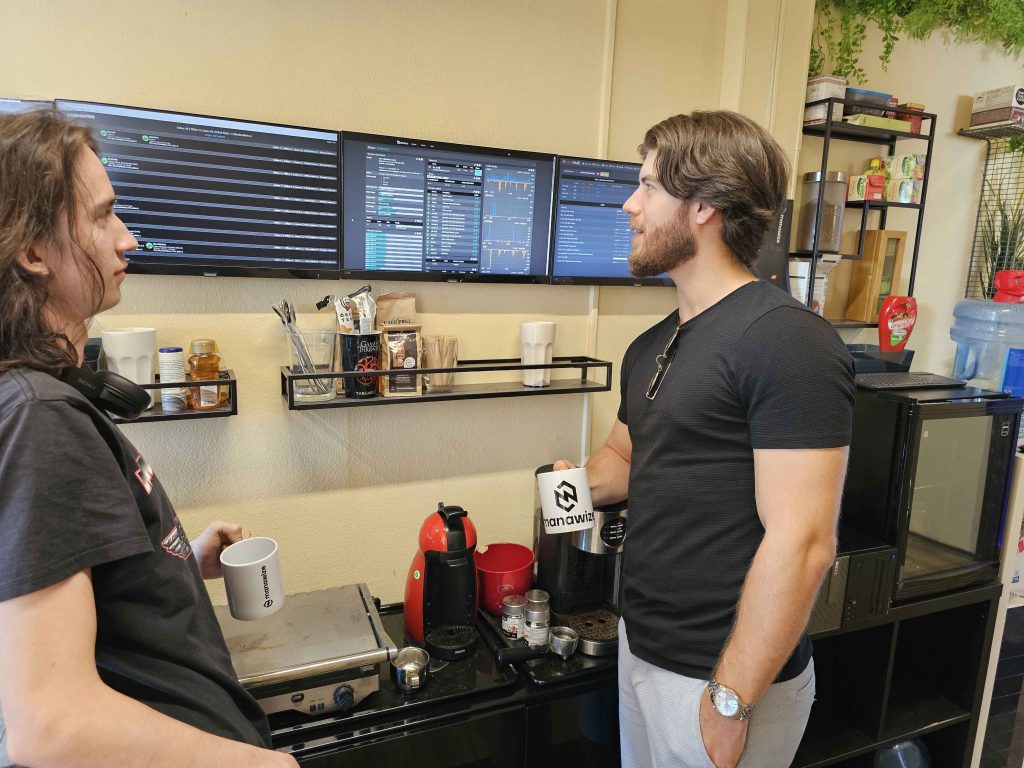
Monitoring isn’t just some fancy tool that your system administrator checks just to make it look like they’re working.
This is a piece of software that monitors and analyses It monitors the condition of your infrastructure, flags up any issues in advance, and alerts us so that we can take action in good time.
A good monitoring system spots the problems that have been swept under the carpet as well, and if your IT environment can’t cope with the load, it will alert you whilst there’s still time to react.
What’s more, these systems can even help to keep you safe, as they alert you to logins, unusual behaviour and unexpected loads in your environment, amongst other things.
„We’re fine without them; nothing’s happened so far”
You’ve probably been lucky so far, but unfortunately that won’t be enough in the long run. Many people think that if something isn’t visible, then there must be nothing wrong with it. But that’s not how things work in the world of IT.
In many respects, your infrastructure is similar to the human body. Just think about it: why do you go for regular screening tests? Because, to look after your health, you want to prevent serious illnesses that don’t show any symptoms at first. The same applies to IT systems. Just because we can’t see something – such as a fault or security vulnerability that is developing gradually – doesn’t mean it isn’t there or that it isn’t affecting operations.
Minor faults or weaknesses lurking in the background do not necessarily become apparent to users straight away, just as an early-stage illness does not necessarily cause immediate symptoms. But if we do not pay attention, data loss, system failures or even cyber-attacks are only a matter of time – and these can have serious consequences.
That is why the continuous monitoring, maintenance and regular „check-ups” of IT systems are essential. Just as you look after your body, you should also look after your company’s IT infrastructure – that way, you can spot problems in good time and prevent more serious damage.
Prevention: How can we maintain the system?
- 🔧Regular maintenance – Regular system checks, carried out weekly or monthly, can help identify problems before they cause any major issues.
- 📈Monitoring tools – Set up notifications and alerts so that you can spot any problems in good time.
- 📲Updates – Don’t put off updates for too long. Every update you install is a step towards greater stability. (In most cases🤔)
- 💾Backups – If everything goes wrong, always have a backup that you can restore. Don’t let your data be lost forever.
Closing remarks: Be proactive, just like a superhero
The best IT professionals don’t just react to problems – they are preparing for them. Even the backup will have a backup. 🧐
Here’s the secret: regular maintenance, updates and monitoring all work in the background to prevent future problems. And if you’re proactive too, you can turn not only your company but also yourself into a superhero in the world of IT.
If you enjoyed this post, follow our page for more heroic stories.
You can also find us on our social media platforms: