





The IT market is not becoming fragmented; it is simply maturing
Reflections following a conference on the future of IT specialisation and partnerships
We recently attended a business conference where the participants included a mix of technology companies, growth-oriented SMEs and decision-makers from large corporations. At such events, you attend presentations, collect leaflets, exchange business cards, and hope that a half-hour chat over lunch might one day lead to mutual cooperation.
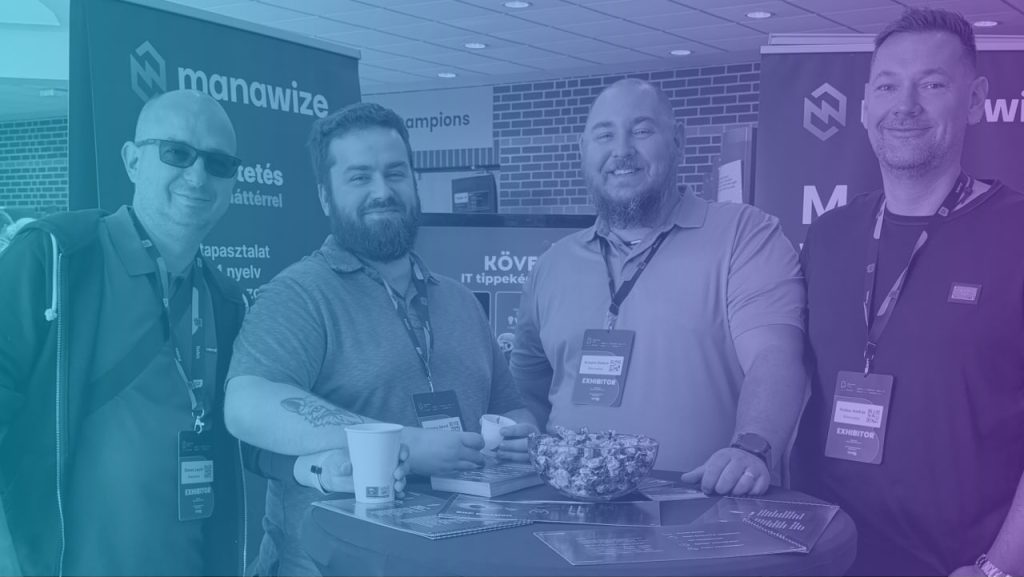
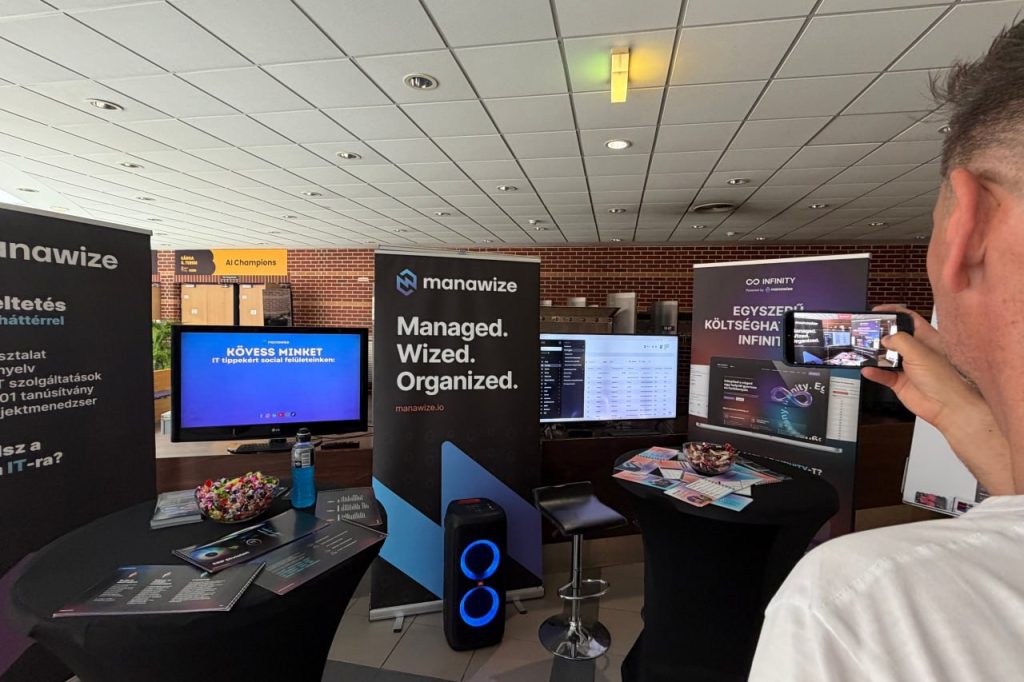
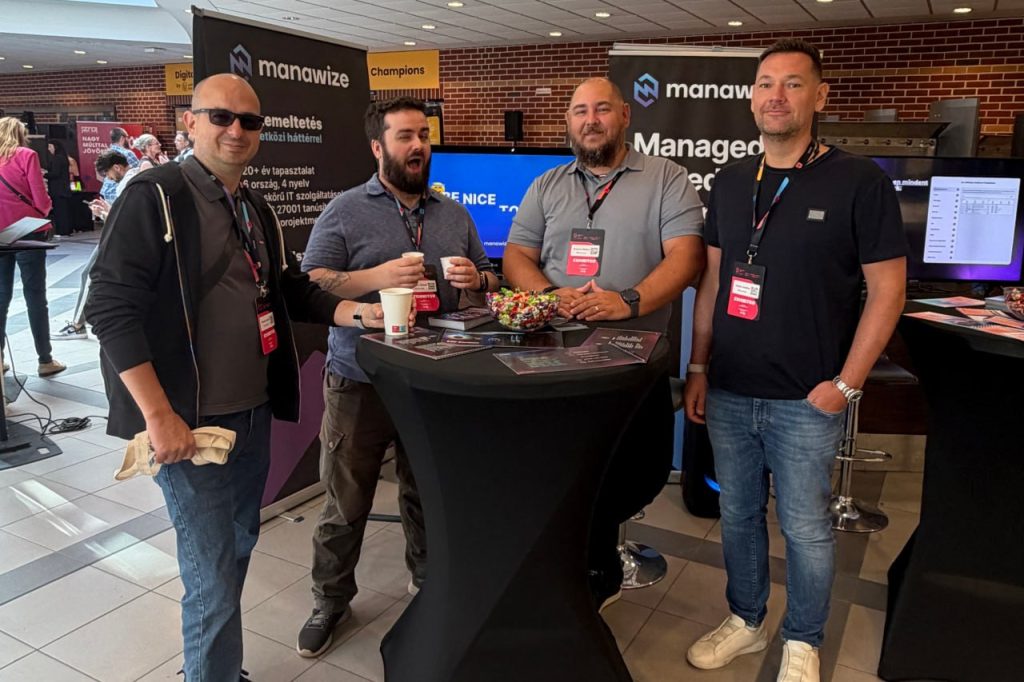
We took part in the event as exhibitors and had an interesting experience. We were approached by several companies from various specialist fields – IT development, IT security, cloud infrastructure, etc. – and they all said more or less the same thing. In different words, but the message was the same:
„My clients regularly need IT operations and day-to-day support, and we’re not able to provide that for them. You handle that, don’t you?”
This experience set us thinking, and I’d like to share those thoughts with you. Not with the intention of selling anything, but because this phenomenon reveals something about the transformation of the entire industry.
Specialisation is no exception; it is the norm
Over the past ten years, the IT sector has become far more specialised at a pace that would previously have been unimaginable. Cybersecurity is now divided into several sub-fields in its own right: some focus exclusively on OT/ICS security, others provide SOC services, and others deal exclusively with penetration testing. In the world of software development, too, it is not uncommon for a team to build up competitive expertise around a single technology stack, and in this context, this is an entirely rational decision.
This is not market fragmentation, but professional maturity. Just as medicine did not fragment into cardiology, neurology and orthopaedics because doctors forgot how to be general practitioners, but because the depth and complexity of knowledge could no longer be contained within the remit of a single person or organisation.
The IT market has taken the same path. A reputable development company that builds React applications or integrates ERP systems will rarely also run patch management and a first-line helpdesk alongside these services. Not because they’re being lazy, but because it no longer fits within their business model, and if they tried to do so, it would undermine their own standards of quality.
What the customer didn’t understand, and what they don’t need to
From the customer’s point of view, the situation is simple: they want a functioning IT environment. They want the computers to start up in the morning, the server not to crash on Friday evening, the backup to run, and, if something goes wrong, for someone to answer the phone or respond and help.
The client doesn’t realise just how many different specialist areas are involved behind the scenes, and let’s face it, they don’t need to – that’s our job.
The problem arises when a specialist service provider wins the development project, successfully delivers the work, and then the client asks: „And who will be responsible for running the system?” Many people are at a loss as to how to answer this question. This is a natural consequence of the structure of the industry.
Clients, however, do not like to hear that „we don’t deal with that”, because they haven’t bought an industry structure, but a solution. And if the solution is incomplete, it casts a shadow over all the work done previously.
Why it’s not worth trying to cover everything, and why so many people try to do so anyway
There is a temptation that grips many IT companies once they reach a certain size: to offer as many services as possible so that the client cannot go elsewhere. The logic is understandable, but the reality is usually quite different.
A development company that has started to take on operational tasks can typically go down one of two paths: either it underestimates the task (and the client becomes dissatisfied with the quality of the operations), or it diverts too many resources away from its core business (and the quality of development suffers). Both scenarios are a lose-lose situation.
A specific analogy helps to clarify this: an excellent internal audit consultancy firm will not provide accounting services simply because the client needs them. Instead, it will recommend partners. This does not weaken the client relationship; rather, it strengthens it, as the client realises that the firm is focused on their interests, not on revenue targets.
The partner ecosystem is not a compromise, but a strategy
The model that an increasing number of players in the IT market are beginning to take seriously is not a new one. In professional services – the legal, financial and consultancy sectors – it has long been standard practice for a client to be assigned a single point of contact, backed by a network of specialists.
In IT, this model is complicated by the issue of liability: if something goes wrong, who is responsible?
This is a real problem, but it can be solved. The key to successful partnerships lies not in contractual safeguards, but in operational alignment: shared communication protocols, clearly defined boundaries, and – something that is often lacking – a mutual understanding of each other’s work.
An IT security firm that understands how its operations partner works can provide far more effective security recommendations than one operating in a vacuum. A development team that is familiar with the operational environment is less likely to make errors of the „doesn’t work in production” variety. This is not a pipe dream, but a sign of maturity.
The role of IT operations in this system
If we look at the feedback received at the conference, there is one common theme: operations is the area that most specialist providers do not cover, yet which almost every client needs.
This is no coincidence.
By its very nature, IT operations are horizontal: they are not tied to a single technology or project, but rather to the day-to-day running of the entire IT environment. This is precisely why it is difficult to fit them into a vertically specialised business model. Those who develop the system do not necessarily want to be responsible for ensuring it runs stably for three years. Those who audit security do not want to handle helpdesk tickets.
But the client needs both, and someone has to pull everything together.
In this system, IT operations providers do not play a „jack-of-all-trades” role, but rather act as a link: they understand, at a technical level, what the developers and security specialists are doing, whilst also assuming operational responsibility. This makes them well-suited to acting as the hub or the glue within partner ecosystems.
What the next two or three years might bring
There are a few trends worth keeping an eye on that are relevant in this context.
The emergence of AI tools in IT does not eliminate the need for expert knowledge; rather, it reshapes it. Some of the tasks that can be automated will disappear, but decision-making, accountability and human interaction will remain – and indeed become even more valued. Anyone who truly understands a client’s systems and people is difficult to replace with a machine.
Due to the increasing number and complexity of cyber-attacks, IT security firms are under ever-greater pressure and can afford to pay less and less attention to operational details. This further reinforces the need for specialisation and partnership-based collaboration.
The IT maturity of the SME sector is growing slowly but surely. An increasing number of small and medium-sized enterprises are finding themselves in the same situation as large companies today: they need expertise in development, operations and security all at once, but are unable – and indeed unwilling – to maintain all three in-house.
Closing remarks – instead of a question
The feedback received at the conference did not suggest that these approaches were aimed at other companies’ clients, but rather that the IT market is increasingly forcing its players to consider: where their own areas of expertise end and with whom it is worth drawing that line.
This is not a sign of weakness, but of professional self-awareness.
The future of IT is unlikely to be one where a single company covers everything; rather, it is likely to be one where the best players know what they do well and who to work with when they need something else.
Those who realise this sooner will not only provide a better customer experience, but will also build more lasting business relationships.
If the collaboration model described above has reminded you of familiar situations, and you’d like to discuss how we can fit into your customer service chain, please feel free to get in touch. Whether it’s about regular operational support, joint client projects or simply an initial consultation: we’re open to a discussion.